Pillow Boxes Bunny C.24: A Practical Asset for Small-Scale Packaging
In the realm of small business packaging, event planning, and personalized gifting, the balance between aesthetic appeal and logistical efficiency is often difficult to achieve. Commercial packaging solutions frequently require high minimum order quantities that are prohibitive for micro-events or boutique product lines. The Pillow Boxes Bunny C.24 printable template addresses this specific gap by offering a scalable, on-demand packaging solution. This digital asset provides a set of six tiny pillow box designs intended for immediate printing, cutting, and assembly. For professionals and serious hobbyists managing inventory or event details, understanding the functional specifications and practical limitations of this template is essential for determining its viability within a broader production workflow.
Functional Specifications and Design Utility
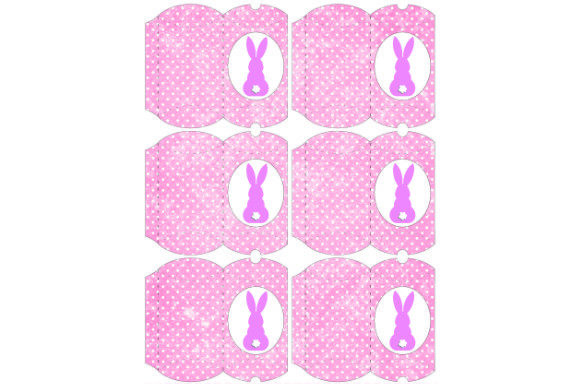
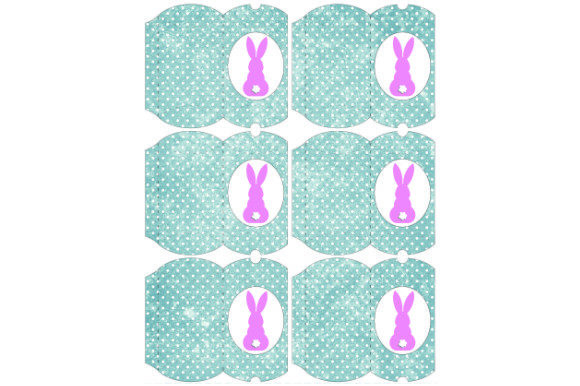
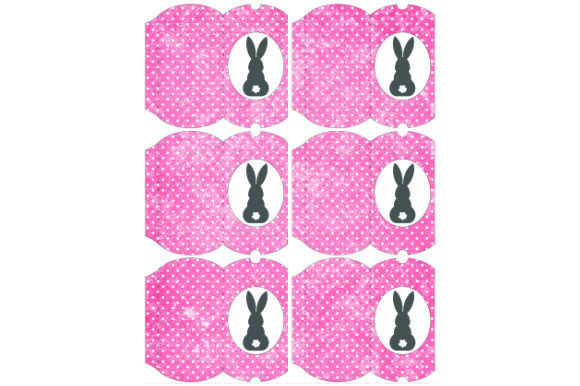
The primary value proposition of Pillow Boxes Bunny C.24 lies in its precise dimensional constraints and format accessibility. Unlike generic templates found on open repositories, this asset is defined by specific measurements that dictate its use case. The finished box features an outer edge length of 7cm, a center length of 5.5cm, a width of 4.5cm, and a height of 1.8cm. These dimensions categorize the product strictly as "tiny" packaging. From a logistical standpoint, this size profile is optimized for low-volume, high-value items rather than bulk goods.
The file is delivered as a single high-resolution JPEG at 300 DPI. For print production, 300 DPI is the industry standard threshold for crisp text and clean vector-like edges on paper substrates. However, the choice of JPEG over PDF or vector formats introduces specific workflow considerations. While JPEG ensures broad compatibility across consumer and prosumer printers without requiring specialized design software, it lacks the scalability of vector files. Users cannot resize the artwork without potential degradation, meaning the 7cm x 5.5cm footprint is fixed. This rigidity requires users to verify product fitment before committing to a print run, as there is no native adjustability within the file structure.
Assembly Workflow and Production Efficiency
For entrepreneurs and event coordinators, time-to-completion is a critical metric. The assembly process for Pillow Boxes Bunny C.24 follows a standard die-cut logic: print, cut along designated lines, fold on scored axes, and adhere side and bottom tabs. The design intentionally leaves the top flap open, allowing for post-fill sealing via stickers, tape, or ribbon. This modular closure system offers flexibility; users can secure boxes immediately for retail display or leave them accessible for interactive event favors.
However, manual assembly imposes a labor ceiling. While efficient for batches of 20 to 50 units, scaling to hundreds of units using this specific printable template becomes labor-intensive compared to pre-glued commercial alternatives. Professionals should view this asset as a solution for bespoke, limited-run applications where customization outweighs volume speed. The inclusion of six boxes per sheet optimizes paper usage, reducing waste during the prototyping and short-run production phases.
Color Management and Print Quality Variables
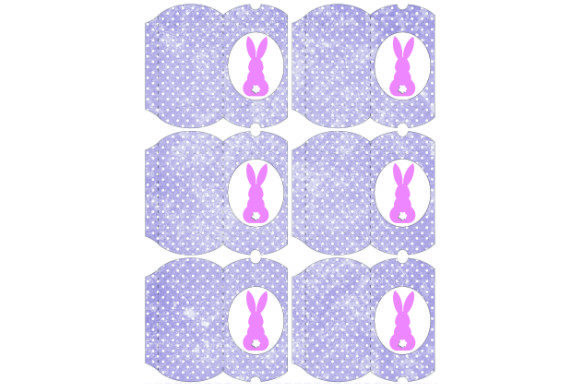
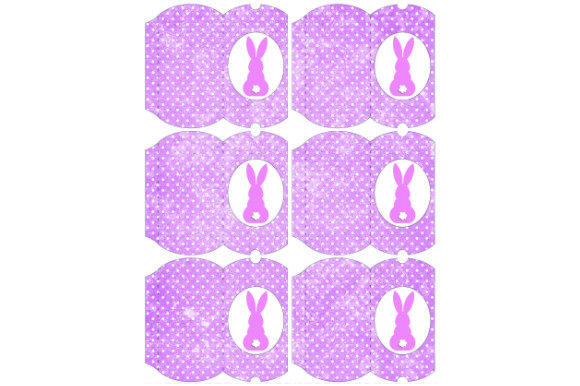
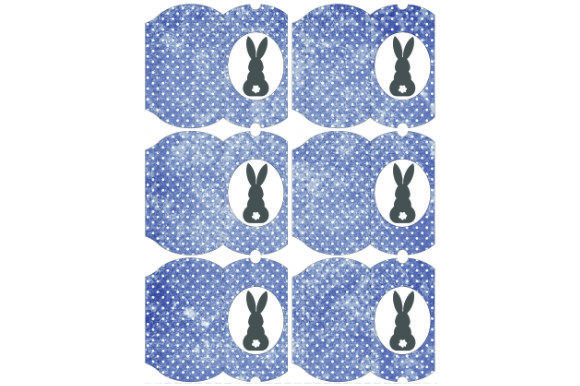
A significant operational risk with any printable digital asset is color fidelity. The product documentation for Pillow Boxes Bunny C.24 explicitly warns that color printing quality varies due to monitor and printer calibration differences. This is not merely a disclaimer but a technical reality of desktop publishing. RGB screen values do not map 1:1 to CMYK ink output, particularly on uncoated or textured papers often used for craft packaging.
To mitigate this variability, professionals should implement a strict proofing protocol:
- Test Prints: Always print a single test sheet on the exact paper stock intended for the final run. Colors shift significantly between matte, glossy, and kraft paper substrates.
- Printer Settings: Ensure printer drivers are set to "High Quality" or "Photo" mode rather than "Standard" or "Draft." Standard modes often reduce ink density, resulting in washed-out graphics that fail to match the screen preview.
- Paper Weight Selection: Given the box dimensions and structural needs, cardstock between 160gsm and 250gsm is recommended. Lighter paper will lack the rigidity required for the 1.8cm height to maintain shape when filled, while heavier stock may be difficult to fold cleanly without scoring tools.
Understanding these variables prevents wasted materials and ensures the final presentation meets professional standards. The "Bunny C.24" aesthetic relies on clean lines and consistent coloring; poor calibration undermines the perceived value of the contents.
Strategic Applications and Audience Fit
The versatility of Pillow Boxes Bunny C.24 extends across multiple verticals, provided the size constraints align with the user's objectives. For small business owners, these boxes serve as premium sample packaging or jewelry holders. The compact size is ideal for earrings, rings, or folded textiles, transforming a simple transaction into a branded unboxing experience without the cost of custom die-cutting.
For event planners and educators, the application shifts toward favor distribution. The boxes function effectively as confetti holders for weddings, candy vessels for baby showers, or treat containers for classroom rewards. The ability to print on demand allows for last-minute adjustments to guest counts, eliminating the surplus inventory issues associated with pre-purchased packaging. Furthermore, the neutral yet thematic design allows for secondary customization; professionals can easily overlay branding, names, or dates using stamps or adhesive labels after printing.
Serious hobbyists and creators benefit from the template’s role in product photography and prototyping. Before investing in mass-produced packaging, creators can use Pillow Boxes Bunny C.24 to visualize how their products present in a boxed format. This aids in social media content creation and market testing, providing tangible assets for feedback loops without significant capital expenditure.
Evaluating Long-Term Value and Limitations
When assessing whether to integrate Pillow Boxes Bunny C.24 into a resource library, one must weigh convenience against scalability. The strength of this asset is its immediacy and low barrier to entry. It eliminates lead times and minimum order quantities, making it indispensable for rush projects or hyper-localized events. The high-resolution source file ensures that, when printed correctly, the output rivals commercially sourced packaging in visual clarity.
Conversely, the limitations are structural and temporal. As a raster-based JPEG, the design cannot be professionally edited to change colors or dimensions without advanced image manipulation skills. Additionally, the manual construction requirement makes it unsuitable for businesses fulfilling orders exceeding 50-100 units regularly. At that volume, the labor cost per unit exceeds the savings from avoiding commercial manufacturing. Professionals should regard this template as a tactical tool for specific scenarios rather than a comprehensive supply chain solution.
Furthermore, storage and organization of the physical prints require consideration. Unlike pre-formed boxes that nest efficiently, flat-printed sheets require proper filing to prevent creasing before use. For users who anticipate recurring needs, creating a dedicated organizational system for the printed but uncut sheets can streamline future workflows.
Practical Recommendations for Implementation
To maximize the effectiveness of Pillow Boxes Bunny C.24, users should approach the project with a production mindset rather than a casual crafting perspective. Invest in precision cutting tools; while scissors suffice for prototypes, a metal ruler and craft knife or a desktop cutting machine yield straighter edges and more professional folds. Clean edges are particularly important for the 4.5cm width dimension, where even minor deviations can affect the box's structural integrity.
Decoration should be planned as part of the assembly line process. If using ribbons, lace, or buttons, batch-process the embellishments before filling the boxes. Attaching decorations to flat or partially assembled boxes is often faster and results in better adhesion than working with fully formed three-dimensional objects. This sequential approach maintains consistency across the set of six or larger batches.
Ultimately, Pillow Boxes Bunny C.24 represents a functional intersection of digital design and physical utility. It empowers users to produce professional-grade micro-packaging with minimal overhead. By respecting its technical specifications, acknowledging color management realities, and applying it to appropriate scale scenarios, professionals can leverage this asset to enhance customer experiences and streamline event logistics effectively. The decision to utilize this template should be driven by a clear alignment between its fixed dimensions and the specific tactile requirements of the items being packaged.