Pillow Boxes Bunny D.20: A Practical Printable Packaging Solution
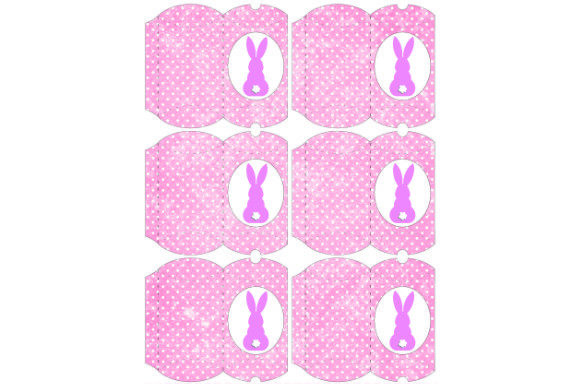
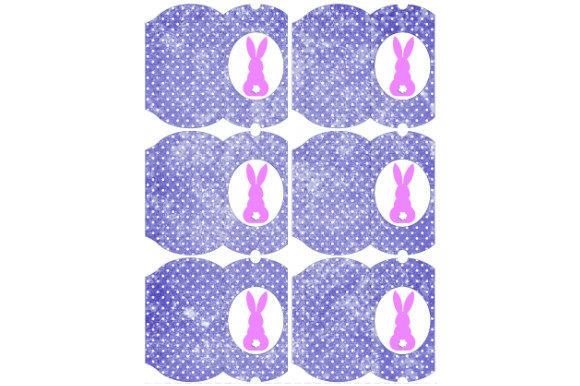
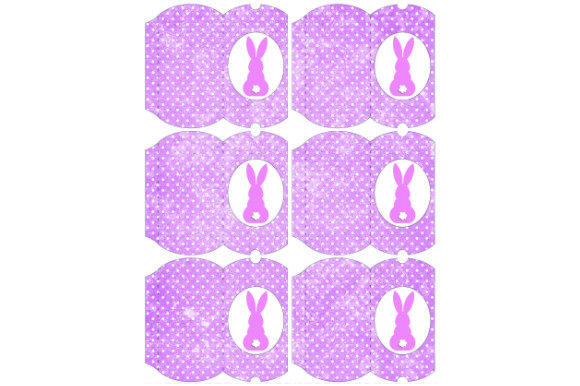
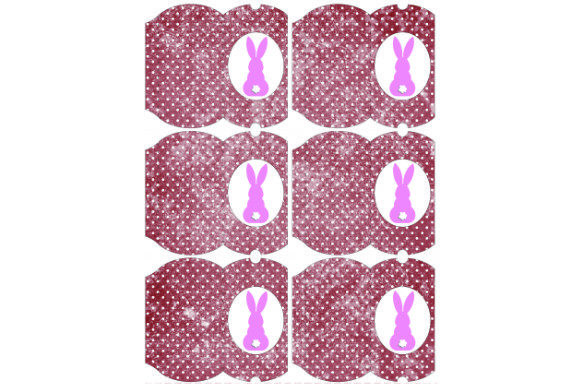
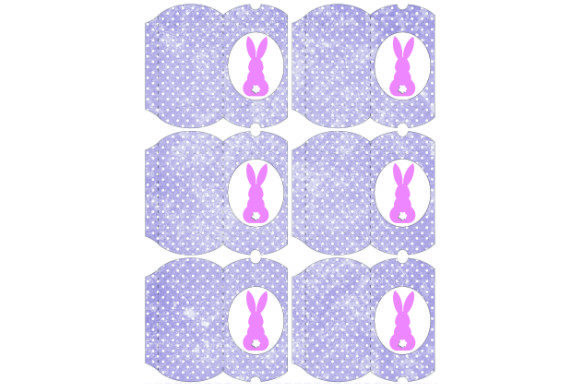
In the realm of small-scale event planning, boutique retail, and personalized gifting, packaging often dictates the perceived value of the contents. The Pillow Boxes Bunny D.20 represents a specific category of digital asset designed to bridge the gap between professional packaging costs and DIY customization. This printable template offers a set of six tiny pillow boxes featuring a bunny motif, tailored for users who require immediate, low-volume packaging solutions without the lead times or minimum order quantities associated with traditional manufacturing. For professionals and serious hobbyists, evaluating this resource requires looking beyond the aesthetic to understand its functional dimensions, print reliability, and integration into existing workflows.
Functional Specifications and Dimensional Analysis
Understanding the precise physical constraints of Pillow Boxes Bunny D.20 is essential before committing to production. Unlike generic templates found on free repositories, this asset provides specific dimensional data that allows for accurate capacity planning. The finished box features an outer edge length of 7cm, a center length of 5.5cm, a breadth of 4.5cm, and a height of 1.8cm.
These measurements classify the item as "tiny," which significantly influences its utility. In practical application, this volume is optimized for lightweight, high-value items rather than bulk goods. The 1.8cm height is the critical limiting factor; it accommodates standard jewelry, folded currency, confetti, or small confections like jelly beans or dragées, but will likely fail to hold bulky items such as macarons or large truffles. For entrepreneurs using these as product packaging, verifying that your specific inventory fits within these tolerances is a necessary first step. The compact footprint also makes them ideal for place settings at weddings or bridal showers where table real estate is limited, ensuring the favor does not overcrowd dinnerware or floral arrangements.
Technical Quality and Print Considerations
The digital file is supplied as a single high-resolution JPEG at 300 DPI. From a technical standpoint, 300 DPI is the industry standard for crisp commercial printing, ensuring that the bunny illustration and any fold lines remain sharp rather than pixelated. However, the choice of JPEG format warrants professional consideration. While universally compatible, JPEG is a lossy compression format. Users should inspect the file upon receipt to ensure no compression artifacts appear along the cut lines or color gradients, as these can translate to visible defects on printed cardstock.
A significant variable in utilizing Pillow Boxes Bunny D.20 is color fidelity. As noted in the product specifications, monitor and printer calibrations vary extensively. A screen displaying vibrant pastels may yield muddy or oversaturated results on paper due to the difference between RGB (screen) and CMYK (print) color spaces. Professionals should treat the first print as a proofing exercise. Testing on the exact paper stock intended for final production is mandatory, as uncoated cardstock absorbs ink differently than glossy photo paper, altering both color saturation and structural integrity. Relying solely on screen preview is insufficient for quality assurance in client-facing projects.
Assembly Workflow and Structural Integrity
The efficiency of any printable packaging lies in its assembly logic. Pillow Boxes Bunny D.20 follows a standard print-cut-fold-glue workflow. The design includes designated glue tabs for the sides and bottom, with an open top intended for securing via stickers or tape. This construction method prioritizes speed over mechanical locking, which has implications for durability and labor.
- Adhesive Selection: Because the box is small and lightweight, heavy-duty glues can cause warping. Double-sided tape runners or precision glue pens are recommended over liquid glues to maintain the clean aesthetic and prevent bleed-through on the 4.5cm broad face.
- Scoring vs. Cutting: While the instructions suggest folding on lines, professional results require scoring. Using a bone folder or an empty ballpoint pen to indent the fold lines before folding prevents cracking in the paper fibers, especially if printing on heavier cardstock necessary for structural rigidity.
- Closure Security: The reliance on external stickers or tape for the top closure suggests the box is not self-locking. For retail environments where products may be handled frequently, this could be a vulnerability. However, for static displays or direct hand-offs at events, this closure method allows for easier access and resealing by the recipient.
Strategic Applications for Business and Events
The versatility of Pillow Boxes Bunny D.20 extends across multiple use cases, provided the user aligns the application with the box’s size limitations. For small business owners, particularly those in the jewelry, craft, or confectionery sectors, these boxes serve as cost-effective sampling vessels or add-on gift packaging. The ability to print on demand eliminates storage issues associated with pre-made boxes and allows for seasonal agility; one can print the bunny design for Easter or spring promotions and switch designs instantly without discarding inventory.
Event professionals will find primary value in the "favor" and "confetti holder" applications. At weddings and baby showers, consistency is key. Printing a set of six from a single file ensures uniform color and alignment across all units, avoiding the batch variations common in cheap bulk purchases. Furthermore, the customization potential is significant. Because the user controls the printing and finishing, these boxes can be coordinated precisely with event stationery suites. Adding ribbon, lace, buttons, or flowers transforms the base template into a bespoke element of the event design, offering a level of cohesion that off-the-shelf favors rarely achieve.
Evaluating Cost-Efficiency and Limitations
While Pillow Boxes Bunny D.20 offers distinct advantages, it is not a universal solution. The economic model shifts based on volume. For a run of 20 to 50 boxes, the cost per unit (paper + ink + labor) is negligible compared to custom die-cutting. However, for volumes exceeding 200 units, the manual labor of cutting, folding, and gluing becomes a significant bottleneck. Professionals must calculate their hourly labor rate against the savings on materials. If assembly time detracts from higher-value tasks, outsourcing to a commercial printer with automated die-cutting may be more prudent despite the higher upfront cost.
Additionally, the single-file delivery method implies that all six boxes are identical. If a project requires numbered boxes or individualized names printed directly on the packaging, this template requires manual editing or post-print labeling. Users seeking variable data printing capabilities may need to import the JPEG into layout software like Illustrator or InDesign to overlay text, adding a layer of complexity to the workflow.
Material Recommendations for Optimal Results
The success of Pillow Boxes Bunny D.20 is heavily dependent on substrate selection. Standard copy paper (80gsm) is generally too flimsy to hold the pillow shape or support decorative additions like buttons and lace. Conversely, cardboard thicker than 250gsm may be difficult to fold cleanly at the 1.8cm height without specialized scoring tools.
For the best balance of structure and ease of assembly, cardstock in the 160gsm to 220gsm range is recommended. Matte finishes tend to photograph better for social media documentation of events, while silk or satin-finish papers elevate the tactile experience for luxury gifting. When decorating with ribbons or lace, consider the weight of the embellishment relative to the box; heavy adornments can crush a tiny 4.5cm wide container. Lightweight grosgrain, organza, or paper-based trims usually complement this scale better than heavy velvet or metallic hardware.
Final Assessment of Utility
Pillow Boxes Bunny D.20 serves as a functional tool for specific, low-volume packaging needs. Its value proposition lies in immediacy, dimensional precision, and aesthetic adaptability. It effectively solves the problem of sourcing small quantities of themed packaging without compromising on resolution or design intent. However, its utility is bounded by physical size constraints and manual assembly requirements. For educators creating classroom rewards, marketers preparing sample kits, or hosts managing intimate gatherings, it offers a reliable, professional-grade option. For large-scale commercial distribution, it functions better as a prototyping tool or a niche supplement rather than a primary packaging line. By respecting its technical parameters and investing in proper material testing, users can leverage this digital asset to create polished, tangible experiences that enhance their broader creative or commercial objectives.