Constructing a Glue-Free Halloween Pumpkin Box: A Technical Guide to Digital Fabrication
The intersection of seasonal aesthetics and structural engineering presents a unique challenge for digital fabricators. When designing festive packaging, the goal is often to balance visual appeal with mechanical integrity without relying on adhesives that can compromise the finish or increase assembly time. The Halloween Pumpkin Box exemplifies this balance through a glue-free interlocking mechanism and versatile file preparation. Thank you for your interest in this design; understanding its technical specifications and assembly logic is essential for maximizing the utility of this digital product only. This guide explores the structural nuances, material considerations, and workflow optimizations necessary for both hand-cutting artisans and machine-cutting professionals.
Mechanical Design and Interlocking Architecture
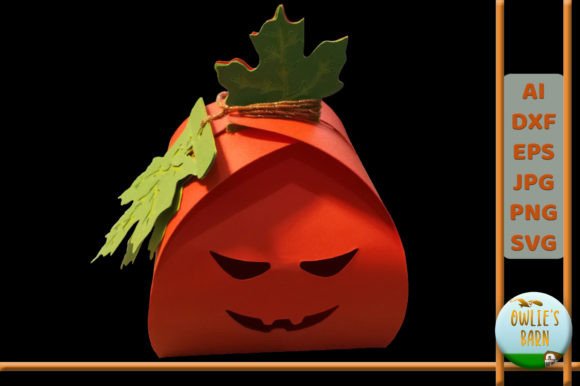
Unlike traditional box templates that depend on glue tabs or tape, this curved Halloween-themed box utilizes friction and tension to maintain its form. The primary closure system involves two leaves positioned on the top lid. These components are engineered to slide through precise slits cut into the opposing panel, creating a self-locking seal. This tab-and-slot architecture requires exact tolerances; if the slits are too wide, the box will not hold its shape, and if they are too narrow, the paper may tear during assembly. For creators using laser cutters or CNC machines, verifying the kerf compensation settings is critical to ensuring these mechanical joints function as intended.
The curvature of the box body adds another layer of complexity. Flat cardstock must be transformed into a rounded vessel without cracking or losing structural memory. The design incorporates specific score lines or perforations to facilitate this bending process. Score lines compress the paper fibers to create a clean fold, while perforations remove material intermittently to allow flexibility. Choosing between these two options depends heavily on the substrate weight and the desired final texture. Heavier cardstocks generally respond better to scoring, whereas intricate curves on lighter papers may benefit from the reduced resistance of perforations.
The Lantern Face Cutout and Optional Inserts
A defining characteristic of this Halloween Pumpkin Box is the lantern face cutout on the front panel. This negative space serves a dual purpose: it establishes the thematic identity of the package and provides a window for internal illumination or content visibility. However, open cutouts can sometimes expose contents prematurely or reduce the box's rigidity. To address this, the design includes an optional insert specifically shaped to cover the holes from the inside.
This insert acts as a backing layer, allowing the crafter to decide whether the lantern face should be transparent or opaque. In educational settings or retail environments, this modularity is particularly valuable. A teacher might leave the insert out to display student work visible through the pumpkin face, while a business owner might use the insert to provide a solid background for branding or to conceal a surprise gift until the recipient opens the lid. When assembling the insert, alignment with the outer shell is paramount to prevent shifting during handling.
Digital Asset Management and File Formats
Navigating the downloadable ZIP folder efficiently ensures a smooth transition from download to production. The archive is organized into two distinct sub-folders, separating the version with score lines from the version with perforations. This segregation prevents accidental selection of the wrong cutting parameters, which is a common error in high-volume production environments. Each sub-folder contains a comprehensive suite of formats including AI, DXF, EPS, JPG, PNG transparent, and SVG.
- SVG and DXF: These vector-based formats are the industry standard for electronic cutting machines like Cricut, Silhouette, and Brother ScanNCut. They retain node information and path data, allowing for automatic line type detection (cut vs. score).
- AI and EPS: Ideal for professional designers who need to modify the artwork in Adobe Illustrator or CorelDRAW before fabrication. These formats preserve layers and editable anchor points.
- PNG Transparent: Essential for digital mockups, print-on-demand applications, or overlaying the design onto textured backgrounds without white bounding boxes.
- JPG: Primarily used for reference imagery and the included assembly instructions rather than cutting paths.
An additional PNG file contains the leaves assembled for easy printing. This variation is specifically optimized for users who wish to print the design directly onto cardstock using an inkjet or laser printer before hand-cutting. Unlike the separated cut files, this composite image ensures proper registration between color elements and cut lines, reducing waste during the manual fabrication process.
Critical Workflow Considerations for Machine Cutting
For machine-cutting operators, one technical step stands above all others in importance: attaching grouped layers before sending the job to the cutter. Digital cutting software often interprets ungrouped elements as separate objects, potentially rearranging them on the cutting mat to optimize space. While this nesting feature saves material, it destroys the spatial relationship required for this Halloween Pumpkin Box. If the score lines shift relative to the cut lines by even a fraction of a millimeter, the box will fail to assemble correctly.
Always verify that all layers are locked or attached within your cutting software’s interface. Perform a test cut on scrap material of identical weight to validate blade depth and pressure settings. Over-cutting can sever the delicate tabs meant to hold the leaf closure, while under-cutting leaves excess material that makes sliding the tabs impossible. The included JPG with assembly instructions serves as a vital quality control reference; comparing the test piece against the instruction diagram allows for immediate calibration adjustments before committing to premium materials.
Material Selection and Application Versatility
The success of this curved design relies heavily on choosing the appropriate paper weight. Cardstock between 65lb (176gsm) and 80lb (216gsm) typically offers the optimal balance of stiffness and pliability. Papers lighter than 65lb may lack the structural integrity to support the leaf closure mechanism, causing the lid to sag. Conversely, cardstocks heavier than 100lb may resist the curve formation and require excessive force to lock the tabs, increasing the risk of creasing or tearing along the fold lines.
Beyond material weight, surface texture influences the final aesthetic. Matte finishes absorb light softly, enhancing the lantern effect when backlit, while glossy surfaces reflect ambient light and create a more vibrant, polished appearance. For educators utilizing this project in classroom settings, uncoated cardstock is preferable as it accepts markers, crayons, and paint, allowing students to customize their Halloween Pumpkin Box after assembly. Business owners creating branded packaging might opt for pre-printed or metallic cardstocks to elevate the perceived value of the product inside.
Use Cases Across Professional and Creative Domains
The adaptability of this digital template extends far beyond personal crafting. Small business owners frequently utilize such designs for limited-edition seasonal packaging. The glue-free construction significantly reduces labor costs during fulfillment, as no drying time is required. The integrated gift tag eliminates the need for separate tagging supplies, streamlining the packaging workflow. For event planners, these boxes serve as uniform favor containers that align with themed decor while offering guests a functional keepsake.
In research and development contexts within the packaging industry, designs like this serve as case studies in sustainable engineering. By eliminating adhesives, the box becomes fully recyclable and biodegradable, addressing growing consumer demand for eco-friendly packaging solutions. The modular nature of the insert also demonstrates principles of adaptive design, where a single base template can be modified for multiple end-use scenarios without requiring entirely new tooling or dies.
Educators and workshop leaders find particular value in the layered complexity of this project. It introduces concepts of geometric transformation, tolerance, and mechanical fastening in a tangible, engaging format. Students learn that precision matters—not just for aesthetic reasons, but because the physical function of the object depends on accurate execution. The inclusion of both scored and perforated versions allows instructors to demonstrate how different manufacturing techniques affect material behavior, turning a simple craft project into a practical lesson in design technology.
Optimizing the Hand-Cutting Experience
While digital fabrication dominates modern production, hand-cutting remains a valued skill for prototyping and artisanal work. For those approaching this Halloween Pumpkin Box without automated equipment, the PNG without any lines serves as a pure shape guide, while the scored/perforated versions provide essential folding references. Using a bone folder along score lines creates crisp, professional edges that fingers alone cannot achieve. When cutting the lantern face manually, a sharp detail knife with a fresh blade is non-negotiable; dull blades drag through paper fibers, creating frayed edges that detract from the intricate facial features.
Hand-cutters should pay special attention to the leaf closure tabs. Rather than cutting straight across the tab ends, slightly rounding the corners reduces insertion friction and prevents catching on the slit edges. This minor modification, easily made during manual cutting, significantly improves the user experience during assembly. The layered gift tag can be assembled using foam adhesive dots to create dimensional separation between layers, adding tactile interest that flat machine-cut versions may lack unless specifically configured for multi-pass cutting.
Understanding the full scope of this digital product—from file organization and mechanical design to material science and application diversity—transforms it from a simple seasonal template into a versatile fabrication resource. Whether producing hundreds of units for commercial distribution or crafting a single prototype for educational demonstration, attention to these technical details ensures consistent, professional results. The glue-free engineering and modular components reflect thoughtful design priorities that serve makers across the spectrum of expertise and intent.