Bull Papercraft Template: A Printable 3D Model Guide
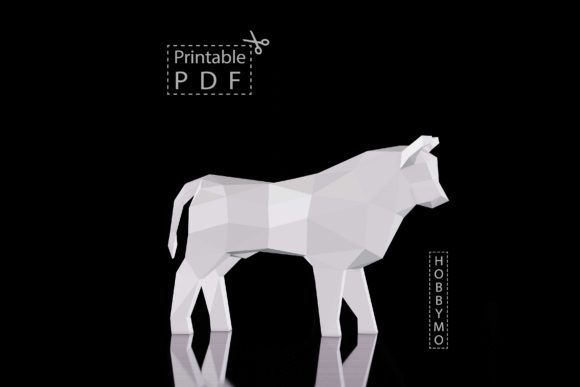
Creating a tangible, three-dimensional object from a flat digital file offers a unique sense of accomplishment that screen-based work simply cannot replicate. The Bull papercraft template is designed to bridge the gap between digital design and physical sculpture, providing a structured yet creative outlet for makers of all skill levels. This project results in a striking model with finished dimensions of 273 x 157 x 378 mm, making it substantial enough to serve as desk decor, an educational prop, or a portfolio piece. Whether you are looking to unwind after a long day of cognitive labor or seeking a hands-on activity to teach geometry and patience, this printable template adapts to your specific context and goals.
Understanding the Digital Template Package
Before cutting into paper, it is helpful to understand exactly what this digital asset provides. The Bull template is not merely a single image but a comprehensive construction kit distributed across three distinct files. This modular approach allows users to select the version that best fits their available time, materials, and printer capabilities.
- Instruction File: A dedicated guide that walks through the assembly logic, ensuring that even first-time builders can navigate the folding and gluing sequence without frustration.
- Standard PDF Template: This version spreads the model across eight A4 or Letter-sized sheets. It typically offers larger individual facets, which can be easier to handle for those with larger hands or those who prefer fewer glue seams.
- BONUS Compact PDF Template: An optimized layout that fits the exact same 273 x 157 x 378 mm final model onto only six A4 sheets. This variation is ideal for users conscious of paper waste, ink consumption, or those working with limited printing resources.
Both template versions produce an identical final size, so the choice between them comes down to personal preference regarding print economy versus assembly convenience. Understanding these options upfront prevents material waste and aligns the project with your practical constraints.
Material Selection and Tool Preparation
The success of any papercraft model relies heavily on choosing the right substrate. For the Bull template, standard office copy paper is generally too flimsy to support the structural integrity of a 378 mm long model. The recommended weight range is 160–240 g/m². This thickness provides the necessary rigidity for crisp folds and durable joints while remaining pliable enough to manipulate without cracking.
Beyond paper, having the correct tools transforms assembly from a chore into a precise craft. You will need sharp scissors or a craft knife for clean edges; ragged cuts make alignment difficult during gluing. A metal ruler is essential not just for measuring, but for guiding straight cuts and scoring fold lines. Perhaps most importantly, an inkless pen, awl, or the blunt side of a craft knife is required for scoring. Scoring compresses the paper fibers along the fold line rather than breaking them, resulting in professional, sharp creases that define the low-poly aesthetic. Finally, a quality glue stick or PVA adhesive ensures bonds hold without warping the paper, which can happen with water-heavy liquid glues.
Perspectives for Beginners and Hobbyists
For those new to papercraft or returning to it after years away, the Bull template serves as an accessible entry point. Beginners often prioritize ease of use and clear guidance over complexity. The inclusion of a dedicated instruction file addresses the anxiety of starting a multi-sheet project. The logical progression of assembly allows novices to build confidence incrementally, mastering basic techniques like valley folds, mountain folds, and tab gluing before moving to more complex geometric intersections.
Hobbyists, conversely, may evaluate the template based on its meditative qualities and creative flexibility. For this group, the value lies in the process rather than just the product. The repetitive nature of cutting, scoring, and assembling can induce a flow state similar to knitting or woodworking. Experienced hobbyists might also appreciate the compact template option as a test of efficiency, challenging themselves to minimize waste or experiment with different paper textures and colors to create a unique variation of the base design. The model’s size is large enough to be satisfying but manageable enough to complete over a weekend without dominating a workspace.
Educational and Professional Applications
Educators and parents often seek activities that combine tactile engagement with conceptual learning. The Bull template is an excellent resource for teaching spatial reasoning, geometry, and following technical instructions. Unlike abstract textbook diagrams, assembling this model requires students to visualize how two-dimensional shapes translate into three-dimensional forms. The requirement to use specific tools like scorers and rulers also introduces fine motor skill development and safety practices in a controlled environment. For homeschoolers or art teachers, the dual template options allow for differentiated instruction; younger or less experienced students might use the standard version with larger pieces, while advanced students could tackle the compact layout or explore modifications.
Professionals in creative fields such as graphic design, architecture, or marketing may find value in the Bull template as a demonstration of precision and material understanding. In an era of digital saturation, possessing a physical, hand-assembled object signals attention to detail and patience. Photographers and content creators might use the finished model as a stylized prop for product shoots or social media content, leveraging its geometric aesthetic to add visual interest. For entrepreneurs and small business owners, such templates can serve as low-cost prototyping tools for understanding packaging structures or as unique, handmade gifts for clients that carry more personal weight than generic merchandise.
Evaluating Fit for Your Specific Goals
Determining whether this template matches your needs requires honest assessment of your priorities. If speed is your primary concern, be aware that even the compact version requires significant time investment for cutting and assembly; this is a slow-craft project by design. However, if reliability and predictable outcomes matter most, the standardized dimensions and tested template layouts reduce the risk of failure common in free, unverified online patterns.
Consider your available workspace and storage. The finished 273 x 157 x 378 mm footprint requires adequate drying space during assembly and permanent display or storage area afterward. Those in shared or temporary spaces might appreciate that the digital nature of the template means no physical inventory until you choose to print; you can start and stop as your environment allows. Cost-conscious makers should factor in both paper and ink expenses, especially for the eight-sheet standard version, though the six-sheet compact option mitigates this significantly.
Ultimately, the Bull template offers different values to different people. For some, it is a relaxing evening project; for others, a teaching tool or professional asset. By matching the template version and material choices to your specific context—whether that prioritizes economy, education, creativity, or presentation—you ensure the time invested yields meaningful satisfaction. The key is approaching the build not as a race to completion, but as an intentional practice aligned with your current skills, resources, and objectives.