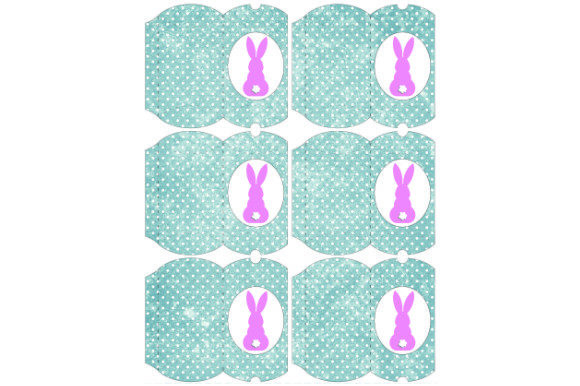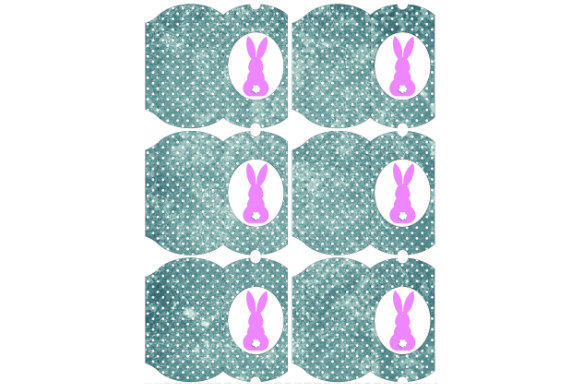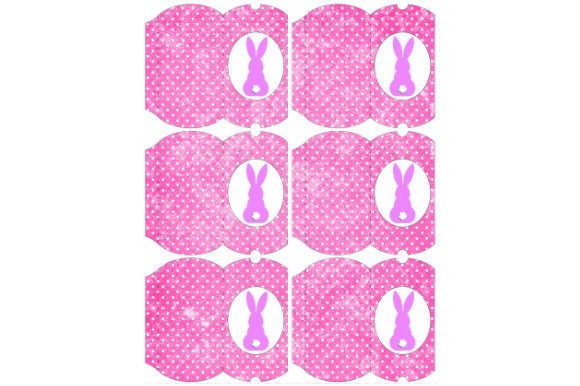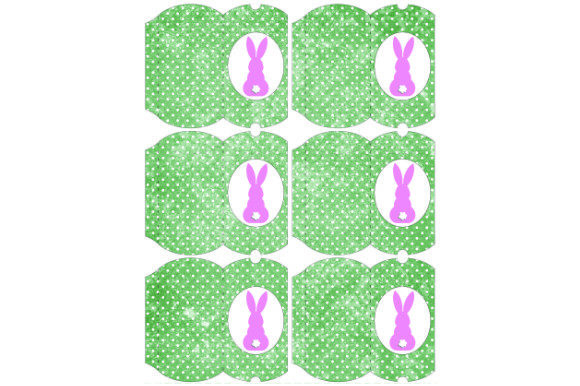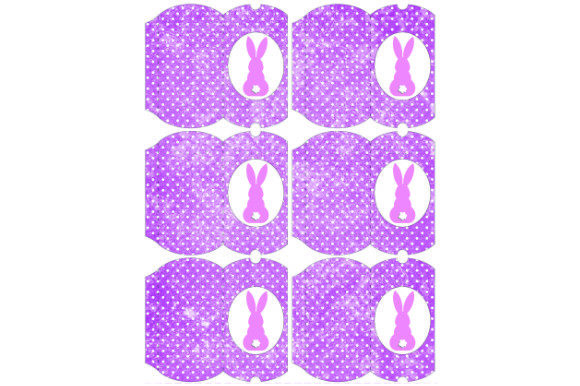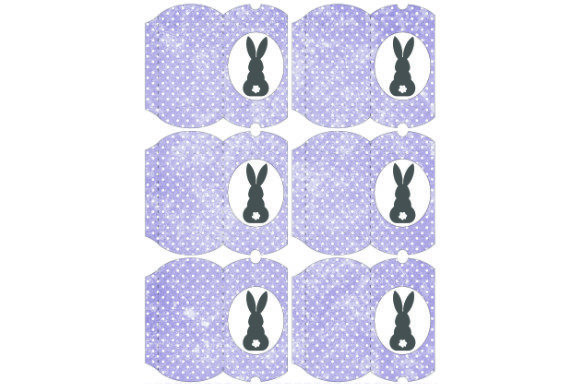
Pillow Boxes Bunny C.20: Printable DIY Gift Packaging
Elevating the presentation of small gifts and party favors often requires a balance between aesthetic appeal and practical efficiency. Pillow Boxes Bunny C.20 offers a streamlined solution for creators, event planners, and small business owners who need professional-looking packaging without the lead time or minimum order quantities associated with commercial printing. This set of six tiny, printable pillow boxes serves as a versatile template for various occasions, from bridal showers to customer appreciation gestures. By utilizing a high-resolution digital file, users can produce custom packaging on demand, ensuring that every treat or token is presented with intentional care and consistent branding.
Streamlining Event Preparation and Favor Assembly
For event coordinators and hosts managing tight timelines, the ability to print and assemble packaging locally is a significant logistical advantage. Pillow Boxes Bunny C.20 eliminates the uncertainty of shipping delays and allows for last-minute adjustments to guest counts or color schemes. Because the design is provided as a 300 DPI JPEG file, it maintains crisp edges and vibrant details when printed on standard home or office equipment. This resolution is critical for professional results; lower quality files often result in pixelated graphics that diminish the perceived value of the gift inside.
The specific dimensions of these boxes make them uniquely suited for delicate items. With an outer edge length of 7cm, a center length of 5.5cm, a width of 4.5cm, and a height of 1.8cm, they are engineered for small-scale contents. This size constraint is actually a benefit for event planning, as it encourages portion control for candies and prevents overfilling. They function exceptionally well as confetti holders for weddings, where bulkier boxes would be cumbersome for guests to carry. Similarly, for baby showers or children’s parties, the compact size is perfectly scaled for small hands and single-serving treats, reducing waste while maintaining a cohesive visual theme across the venue.
Assembly Workflow for Consistent Results
Achieving a uniform look across multiple units requires a systematic approach to assembly. While the process is straightforward—print, cut, fold, and glue—attention to detail during construction ensures the final product looks manufactured rather than homemade. Users should score the fold lines before creasing to prevent paper cracking, especially when using heavier cardstock. Gluing the sides and bottom securely creates a stable base, while leaving the top open allows for easy filling. Securing the closure with stickers or a small piece of tape adds a layer of security and provides an additional opportunity for branding or thematic decoration.
- Paper Selection: Choose cardstock between 160gsm and 250gsm for optimal structural integrity. Standard printer paper is generally too flimsy to hold the pillow shape effectively once filled.
- Cutting Precision: Use a craft knife and metal ruler or a precision cutter rather than scissors to ensure straight edges and clean curves. Ragged edges detract from the professional finish of the Bunny C.20 design.
- Adhesive Choice: Double-sided tape or glue sticks often provide a cleaner finish than liquid glue, which can warp the paper or leave visible residue on the exterior surface.
Enhancing Brand Perception for Small Businesses
For entrepreneurs, freelancers, and boutique owners, packaging is a tangible extension of brand identity. Pillow Boxes Bunny C.20 provides a cost-effective method for creating branded unboxing experiences for small items like jewelry, USB drives, sample products, or thank-you gifts. The neutral yet charming aesthetic of the bunny design allows it to bridge the gap between playful and professional, making it suitable for creative industries, educators, and artisanal sellers. When customized with ribbon, lace, buttons, or flowers, these boxes transform from simple containers into memorable touchpoints that reinforce customer loyalty.
The economic benefit of printable packaging cannot be overstated for micro-businesses. Traditional custom printing often requires minimum orders of 500 or 1000 units, tying up capital and storage space. With this digital template, a business owner can print exactly six boxes for a weekend market or fifty for a holiday sale, scaling production precisely to match demand. This agility supports better cash flow management and reduces the risk of obsolete inventory if branding or seasonal themes change. Furthermore, the ability to test different paper textures and embellishments without committing to a large print run fosters creativity and allows for iterative improvement of the customer experience.
Customization Strategies for Diverse Audiences
The versatility of Pillow Boxes Bunny C.20 lies in its adaptability to different contexts through external styling. For a wedding, pairing the box with satin ribbon and pearl accents aligns with formal elegance. For a children’s educational setting, bright twine and colorful stickers create an engaging, age-appropriate presentation. Marketers and bloggers can use the flat surface of the closed box to apply custom stamps or labels, effectively turning a generic template into proprietary collateral. This level of customization ensures that the packaging communicates the right message to the specific recipient, whether that message is romance, gratitude, professionalism, or fun.
Navigating Print Variables and Quality Control
While digital templates offer immense flexibility, they also introduce variables that require user awareness. Color reproduction is inherently inconsistent across devices and hardware. The colors displayed on a calibrated monitor will differ from those produced by an inkjet printer, laser printer, or professional print shop. Users must understand that Pillow Boxes Bunny C.20 is a high-resolution source file, but the final output depends entirely on local equipment calibration and paper type. Matte papers tend to absorb ink, resulting in softer colors, while glossy papers enhance vibrancy but may show fingerprints or glare.
To mitigate these discrepancies, it is advisable to conduct test prints before committing to a full batch. Printing a single sheet on the intended paper stock allows for color adjustment in printer settings or image editing software. Checking alignment is equally important; even slight scaling differences in printer drivers can shift cut lines, making assembly difficult. Ensuring the print settings are set to "Actual Size" or "100% Scale" rather than "Fit to Page" preserves the precise 7cm x 5.5cm dimensions necessary for the box to fold correctly. Understanding these technical limitations empowers users to achieve professional results despite the variability of consumer-grade printing technology.
Practical Applications Beyond Traditional Gifting
The utility of these tiny pillow boxes extends beyond standard gift-giving. Educators and therapists can use them as tactile tools for sorting activities, reward systems, or sensory kits. The manageable size makes them ideal for organizing small components in craft rooms, such as beads, sequins, or embroidery floss samples. Photographers and stylists may find them useful as props for flat lay compositions, adding texture and scale to product photography. In corporate environments, they serve as discreet holders for conference badges, earbuds, or mints, offering a more refined alternative to loose distribution. Recognizing these secondary applications maximizes the return on investment for the digital file and encourages resourceful problem-solving in various professional and personal contexts.
Ultimately, Pillow Boxes Bunny C.20 represents a convergence of convenience, creativity, and cost-efficiency. It addresses the real-world needs of adults who value thoughtful presentation but operate within the constraints of time and budget. By mastering the assembly process, understanding print variables, and exploring diverse customization options, users can leverage this simple template to significantly enhance the impact of their small-scale gifting and organizational efforts. The value lies not just in the box itself, but in the autonomy it provides to create beautiful, functional packaging exactly when and how it is needed.