Floral Cancer Awareness Ribbon Thin Box: A Practical Packaging Solution for Awareness Campaigns
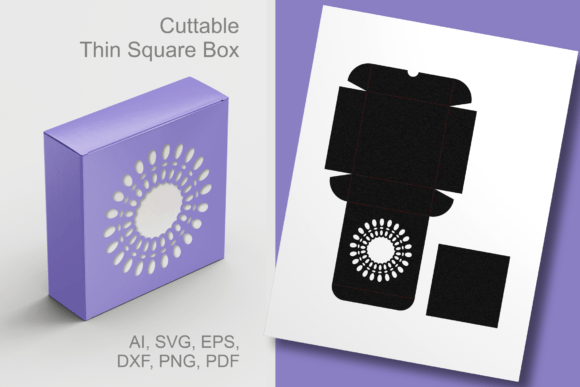
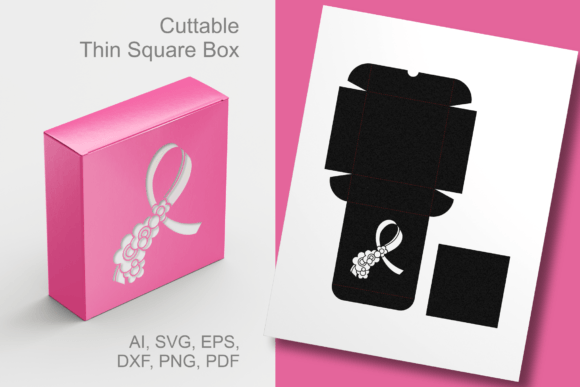
Effective awareness campaigns rely on tangible touchpoints that communicate empathy and purpose without overwhelming the recipient. The Floral Cancer Awareness Ribbon Thin Box serves as a specialized packaging asset designed specifically for this delicate balance. Unlike standard retail packaging, this thin square favor box integrates symbolic design elements directly into its structure through decorative cutouts rather than surface printing. For organizers, educators, and small business owners planning breast cancer awareness initiatives, this template bridges the gap between digital design files and physical community engagement.
This packaging solution fits into the broader workflow of event planning and promotional distribution as a finishing component. It is not merely a container but a communication tool that reinforces the campaign’s visual identity. When integrated correctly into your production pipeline, the Floral Cancer Awareness Ribbon Thin Box transforms generic promotional materials into curated gifts. Understanding how to source, prepare, assemble, and distribute these boxes ensures that your resources are used efficiently and that the final presentation aligns with professional standards of care and quality.
Integrating Digital Assets into Physical Production Workflows
The foundation of this project lies in managing universal vector files effectively. The template is provided in multiple formats including SVG, EPS, AI, DXF, PDF, PNG, and JPG to ensure compatibility across various hardware and software ecosystems. Before beginning production, you must audit your available equipment against these file types. Users with Cricut or Silhouette machines typically utilize SVG or DXF files, while those using laser cutters may prefer EPS or AI for precise pathing. Professional print shops often require high-resolution PDFs or native AI files to maintain vector fidelity during the cutting process.
File preparation is a critical pre-production step that prevents material waste. Although the default dimensions are set to approximately 6 x 6 x 2 inches (15 x 15 x 5 cm), resizing is often necessary based on the specific contents you intend to package. Because the design relies on structural integrity and precise alignment of the floral ribbon cutouts, you should always resize using vector editing software rather than raster image editors. Scaling within Adobe Illustrator, Inkscape, or CorelDRAW maintains the proportional relationship between fold lines and decorative holes. Always perform a test cut on scrap cardstock after resizing to verify that the tab slots still function correctly and that the intricate floral details remain clean at the new scale.
Material Selection and Quality Control
The success of the Floral Cancer Awareness Ribbon Thin Box depends heavily on substrate choice. The "thin" designation implies a lightweight profile suitable for favors, but the paper must still possess enough rigidity to hold its shape when assembled. Cardstock ranging from 65lb to 80lb (176gsm to 216gsm) typically offers the optimal balance. Heavier stocks may cause tearing around the delicate floral perforations during machine cutting, while lighter papers may fail to support the box structure once loaded with promotional items.
Color consistency is another factor in quality control. If you are producing these boxes as part of a larger branded campaign, ensure the paper color matches your official awareness palette. Since the design features negative space in the shape of a floral ribbon, the background color of the tablecloth or surface beneath the box will show through. Plan your staging and photography environments accordingly. For maximum impact, consider placing a contrasting liner inside the box so the floral silhouette stands out distinctly against the interior background, enhancing the visual recognition of the awareness symbol.
Strategic Use Cases Across Project Phases
This packaging template offers versatility across different stages of an awareness initiative. Understanding where it fits in your timeline helps maximize its utility beyond simple gift-giving.
- Pre-Event Teasers: Use the boxes to deliver save-the-dates or VIP invitations. The tactile nature of the die-cut ribbon creates anticipation and signals that the upcoming event is thoughtfully curated.
- During Fundraisers and Walks: Serve as portable kits containing safety pins, ribbons, hydration tablets, or informational pamphlets. The compact 6x6 inch footprint makes them easy to carry for participants while keeping essential items organized.
- Post-Event Appreciation: Repurpose the template for thank-you favors containing seeds, small tokens, or discount codes for future engagement. This extends the lifecycle of your branding assets and reduces the need for separate post-event packaging designs.
- Corporate Wellness Programs: HR departments can utilize these boxes for internal awareness month distributions. They provide a respectful, non-intrusive way to share resources and show support within a professional environment.
Assembly Efficiency and Batch Processing
When producing dozens or hundreds of units, assembly becomes a logistical challenge. Establishing a standardized workflow reduces fatigue and ensures uniformity. Begin by scoring all fold lines before any assembly takes place. If your cutting machine supports scoring tools, use them; otherwise, a bone folder and metal ruler are essential for crisp edges. Pre-folding all tabs inward prior to applying adhesive streamlines the final closure process.
Adhesive selection impacts both assembly speed and longevity. Double-sided tape strips offer the cleanest finish and fastest application for batch processing, eliminating the drying time associated with liquid glues. Hot glue can be effective for rapid prototyping but risks warping thin cardstock and creating bulky seams that detract from the delicate floral aesthetic. For professional results, invest in a tape runner or automated taping system if volume justifies the expense. Store flat-packed boxes until immediately before filling to conserve workspace and prevent accidental crushing.
Content Planning and Fill Compatibility
The internal volume of approximately 15 x 15 x 5 cm dictates what can realistically be included. Effective planning requires measuring potential contents before committing to mass production. This size accommodates flat items exceptionally well, such as awareness cards, silicone wristbands, temporary tattoos, tea bags, or seed packets. Bulky items like full-sized water bottles or large apparel will not fit and could damage the decorative cutouts during insertion.
Consider the weight distribution of your chosen fillers. Because the box features decorative holes on the upper side, heavy items placed directly beneath these openings might sag or tear the paper over time. Place heavier objects at the bottom center of the box and reserve the area beneath the floral ribbon for lightweight tissue paper or filler. This protects the structural integrity of the design while ensuring the symbolic element remains visible and undamaged during transport. If including food items, always use food-safe liners or individual wrapping to comply with health regulations and prevent grease stains from compromising the paper.
Customization Within Template Constraints
While the Floral Cancer Awareness Ribbon Thin Box comes as a pre-designed template, customization is possible without compromising functionality. You can add personalized text, logos, or QR codes to the solid panels adjacent to the decorative areas. However, maintain adequate clearance around the cut lines. Adding elements too close to the floral ribbon or fold tabs increases the risk of misalignment during cutting, which can render the box unusable.
For users integrating this into commercial workflows, consider versioning the template. Create master files with locked structural layers and editable content layers. This allows team members to update messaging for different events without accidentally altering the critical dimensions or cut paths. Document your custom settings, including blade depth, pressure, and material type, in a production log. This institutional knowledge ensures consistency across multiple production runs and enables new team members to replicate quality standards without extensive trial and error.
Sustainability and Long-Term Resource Management
Awareness campaigns increasingly face scrutiny regarding environmental impact. Choosing recyclable or biodegradable cardstock aligns the packaging with the health-focused mission of breast cancer awareness. Avoid coated or metallic papers if recycling is a priority, as these often cannot be processed in standard municipal facilities. Communicate your sustainable choices to recipients through small inserts or social media captions, adding another layer of meaning to the gift.
Digital asset management extends the value of this template beyond a single season. Organize your files with clear naming conventions indicating dimensions, version dates, and compatible machines. Store both the original designer files and your customized production-ready versions. Over time, you may develop variations for different awareness causes or seasonal themes using the same structural base. Maintaining an organized library of proven templates reduces future design costs and accelerates deployment for subsequent campaigns.
The Floral Cancer Awareness Ribbon Thin Box represents more than a craft project; it is a functional component of strategic communication. By approaching its implementation with attention to technical specifications, workflow efficiency, and content compatibility, creators and organizations can elevate their awareness efforts. Whether produced in a home studio or a professional facility, thoughtful execution ensures that every box delivers its intended message of support with dignity and precision. Design by Print Cut Hang provides the structural foundation, but your careful planning and execution bring the true purpose of this packaging to life.